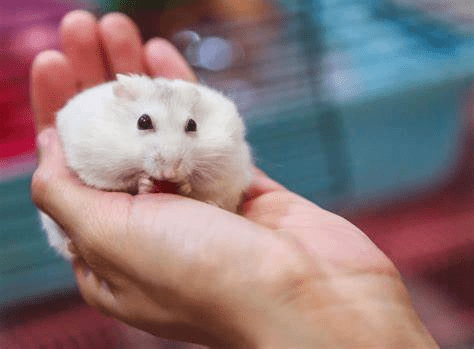
WELCOME TO THE HERD
Welcome to the amazing world of tiny golf balls. Im kidding but they are tiny enough. They all really enjoy to play. So if u ever need someone more energetic…just go find for them. These little guys all act differently in their own way. Why don’t we have a look.
The Beans
Lady Frangelica
Nickname : Princesings Lazeringsing, Lazies
Breed : Campbell’s Dwarf Hamster
Gender : Female
Colour : Black, white & gray
Adopted : January 2nd, 2022
Personality : Very active and runs a lot.
Loves to slide and jump.
Knows the right timing to seek attention for play time.
Can get along with guinea pig – Dior
Baltique Styler
Nickname : Bal Bal
Breed : Winter White Dwarf Hamster
Gender : Female
Colour : White & gray & blackish brown
Adopted : September 24, 2022
Personality : Very active, but shows good behavior when visiting the vet
Cooperate well when giving medication
Not friendly to his peers, enjoys being at own space.
Mendis Blake
Nickname : Men Men
Breed : Winter White Dwarf Hamster
Gender : Female
Colour : White & gray & blackish brown
Adopted : September 24, 2022
Personality : Very timid.
Well behaved and can be left alone un-attend.
Not friendly to her peers, enjoys being at own space.
Fun fact
There are five (5) different types of dwarf hamster breed.
- The Dwarf Campbell’s Hamster
![*]() Winter White Dwarf Hamster
Winter White Dwarf Hamster
![*]() Russian Dwarf Hamster
Russian Dwarf Hamster
![*]() Chinese Dwarf Hamster
Chinese Dwarf Hamster
![*]() Roborovski Robo Dwarf Hamster
Roborovski Robo Dwarf Hamster
ü The Dwarf Campbell’s Hamster
The Campbell’s dwarf hamster tends to be more curious and outgoing than the Chinese or Robo dwarf. This means this dwarf breed is quick and agile and will spend the majority of its time running around playing or exercising on its hamster wheel. Taking this into consideration and in combination with its small stature, makes it a less than ideal option for small children. In addition, the Campbell’s dwarf can be a little nippy when agitated or stressed. You wouldn’t want a hard-to-handle hamster for a small child since it could lead to a runaway hamster or just as likely, an injured hamster.
History and Background
The Campbell’s hamster (Phodopus Campbell) was first discovered in Mongolia in 1902 by W.C Campbell. Over the years, this draft size hamster made its way into the small pet world. At first, these little guys could only be obtained through breeders, but as the demand for a small hamster increased, local pet stores started carrying them. The Campbell’s hamster was the first dwarf breed to be seen in pet stores.
Early on, the Campbell’s dwarf was limited to a single color variation, that being the traditional gray back, white belly, and prominent black dorsal line. However, through breeding programs, these little pets now come in almost as many color variations as the larger Syrian hamster breed does. With all the multiple color options available, the fact that it’s the largest and thought to be the most good-natured dwarf breed makes it the most in-demand and readily available dwarf hamster breed found in local pet stores.
ü Winter White Dwarf Hamster
The Winter White hamster (Phodoppus Sungorus) is one of the several dwarf hamster breeds that make for suitable small pets. This breed is also known as the Western, Siberian, White Russian, and even the Furry Footed Hamster. Winter Whites originate from the southern and western portions of Siberia and eastern Kazakhstan where the winters are cold and snowy. They were bred in captivity in the 1970s and have since become available in pet stores but not as available as the Syrian of Campbell’s dwarf hamster.
Features
The body of the Winter White hamster round and oval about 3 to 4 inches (8-10cm) in length with a short tail. A fully grown Winter White hamster can weigh 1/5 to 2 ounces (40-60g). It has black eyes, larger than those of the Campbell’s. In addition, comparing it to the Campbell’s, the Winter White has smaller ears and thicker fur.
The color of this breed is not limited to all white as the name would suggest. In nature, its color is a grayish-brown upper with a whitish-gray belly divided along the midsection with three distinct arches. During the winter months, the fur will become more white. There are also modified color variations but they don’t turn colors as the natural ones do.
Facts
The Winter White dwarf, even though it’s originally from an area where the winter days are short and cold, they do not hibernate. They will sleep longer and wake up later on in the day though. On average they spend less time out of their burrows or hamster houses than the Campbell dwarf; nearly twice as much. Due to the cold nature of their habitat, they live in communities and the males help take care of their young. See how to take care of a hamster for care information.
The Winter White hamster is known to cause more allergic reactions in humans than any other breed.
 thebeaniess